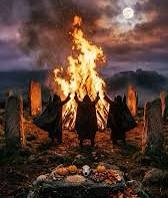
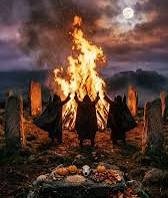
Autumn across the UK and Ireland has historically been a transitional, liminal time where the boundaries between the human world and the supernatural wearing incredibly thin. This time of year—culminating in the ancient Celtic festival of Sanheim, the precursor to modern Halloween. This inspired numerous haunting legends, mythical entities, and nature-based warnings
Halloween or Samhain
Halloween is a globally celebrated autumn holiday that seamlessly blends ancient pagan rituals, Christian holy days, and modern community festivities.Observed annually on 31st October, the holiday is famous today for its playful focus on the supernatural, costume parties, pumpkin carving, and trick-or-treating.
The Origins: From the Ancient Fire Festival to the Modern day Halloween
The Celtic Roots (Samhain): More than 2,000 years ago, the Celts of Ireland, the UK, and northern France celebrated Samhain on 31st October. This festival marked the end of the harvest and the start of the dark winter. The Celts believed the boundary between the living and the dead became blurred on this night, allowing ghosts to roam the earth. To confuse these wandering spirits, people wore disguises made of animal skins and lit massive communal bonfires.
The Christian Influence (All Hallows’ Eve): As Christianity spread, the Catholic Church adapted these existing customs. In the 8th century, the Church moved All Saints’ Day (also called All Hallows’ Day) to 1st November. The night before naturally became All Hallows’ Eve, a phrase that gradually morphed over the centuries into the word “Halloween.
“The Transatlantic Shift: The way Halloween is took its modern shape in the 19th century when millions of Irish and Scottish immigrants moved to North America. They brought over traditions like carving scary faces into vegetables—swapping the traditional hard European turnips for softer, native American pumpkins. By the mid-20th century, Halloween had shed most of its dark, superstitious roots to become a highly commercialised, family-friendly event centered on neighborhood trick-or-treating.
Modern Traditions and What They Mean
Trick-or-Treating: Derived from the medieval Christian practice of “souling,” where the poor would knock on doors offering prayers for the dead in exchange for small “soul cakes.” Today, children dress up and go door-to-door to collect sweets.
Jack-o’-lanterns: Based on an Irish folktale about Stingy Jack, a man doomed to wander the earth with only a burning coal inside a hollowed-out turnip to light his way.
Costumes: A direct evolution of the ancient Celtic practice of masking oneself to hide from malevolent spirits. Today, costumes span from classic monsters like witches and vampires to pop-culture heroes.
The night of 31st October marks a grim, centuries-old threshold when the shroud between the living and the dead wears dangerously thin. While modern culture has sanitized the date with plastic decorations and sweet wrappers, Halloween is at its core a relic of ancient dread—an annual reckoning with winter, darkness, and the hungry spirits that walk within them.
The Ancient Cult of Samhain
The true foundations of Halloween lie buried in the iron-age soil of Ireland and Great Britain, rooted in the ancient Celtic fire festival of Samhain. For the Celts, this night marked the violent death of the old year and the onset of a brutal, unforgiving winter. It was a terrifying, liminal window where physical reality collapsed into the supernatural. The dead arose from their barrows, and malicious, primordial entities crossed over from the Otherworld to torment mortals and blight the final harvest.To survive the night, people huddled around colossal, sacrificial bonfires lit by Druid priests. They blackened their faces with ash or wore grotesque masks fashioned from animal skulls and hides—not for amusement, but as essential camouflage to trick the roaming phantoms into passing them by unnoticed.
The Christian Sanitisation
Christian missionaries swept across the Celtic lands, they sought to tame this deep-seated fear of the dark. The Church superimposed All Hallows’ Eve (the night before All Saints’ Day) directly over Samhain, attempting to redirect pagan terror into pious devotion. Yet, the old ghosts refused to be buried. The populace simply adapted, morphing the ancient dread into medieval rituals like “souling”—where the desperate and destitute walked the cold nights, begging for cakes in exchange for praying for souls trapped in the agonizing fires of Purgatory. The Emigrants’ Legacy and the Modern Shadow.
When the Irish fled the starvation of the 1840s Potato Famine, they carried these dark superstitions across the Atlantic. Among them was the haunting legend of Stingy Jack, a wretched soul barred from both Heaven and Hell, condemned to wander the eternal twilight of earth with nothing but a ember of hellfire nestled inside a carved turnip. In the New World, these lanterns were transplanted into native pumpkins, creating the jagged, grinning visages we know today—originally carved to terrify and ward off the wandering dead. Today, every time a costume mask is pulled over a face, a candle is lit inside a hollowed-out skull, or a door is opened to the shadows of the night, we whisper a modern echo of an ancient, terrifying truth: the dark is coming!
To survive the suffocating dark of Samhain, the ancient Celts did not merely hide—they engaged in bloody, desperate rituals to appease the entities ruling the night. These ancestral rites were designed to protect their families, predict their fates, and secure their survival through the freezing months ahead.
The Sacrificial Bonfires and Blood Rites
As the sun set on 31st October, every hearth fire across the Celtic lands was deliberately extinguished, plunging entire villages into a terrifying, absolute blackness. The community then gathered on sacred hilltops, such as Tlachtga (the Hill of Ward) in Ireland. There, Druid priests kindled a massive, singular communal bonfire using a wheel to generate friction, symbolizing the dying sun.
Animal Sacrifices: To feed and placate the aggressive gods and wandering spirits, livestock were slaughtered and cast into the roaring flames. The bones were left to burn into ash, creating a literal “bone-fire.
“The Shared Flame: Once the dark gods were satisfied, heads of households would take a glowing ember from this sacred pit inside a hollowed-out turnip or a dynamic torch. They ran through the dark to relight their own cold hearths, bringing a spark of protective magic back to shield their homes from winter’s malice.
Dark Camouflage and Silent Feasts.
The boundary between worlds was a two-way door. While spirits walked the earth, living humans risked being pulled back into the burial mounds of the Sidhe (the fairy realm).
Masking with the Dead: To walk among the spirits safely, Celts wore grotesque disguises. They draped themselves in the tanned skins and hollowed-out skulls of sacrificed cattle and smeared their faces with black bonfire ash. If a phantom encountered them in the dark, it would mistake the living person for a fellow corpse or demon and pass them by.
The Dumb Supper: Inside the home, families laid a place at the dinner table in complete, heavy silence—a ritual known as the “Dumb Supper.” Food was left out for the ghosts of ancestors who might visit, while windows and doors were left unlocked to allow them entry. Conversely, outside the boundaries of the village, offerings of crops and drink were left in ditches to distract more malevolent, non-human entities from approaching the home.
Cruel Divinations
Because the veil was torn, the Celts believed the fabric of time itself was loose, making Samhain the premier night for peering into the future. Druids would read the agonizing death throes of sacrificed animals or study the erratic shapes of the bonfire’s smoke to predict who would survive the coming winter. Regular folk practiced their own grim fortune-telling. They would drop stones into the dying embers of the festival fire, each stone representing a person. If a stone was displaced or missing by the following morning, it was a certain omen that the person it belonged to would die before the next harvest.


Leave a Reply